Budget Travel in Morocco: best Guide to Affordable Adventures
Budget Travel in Morocco
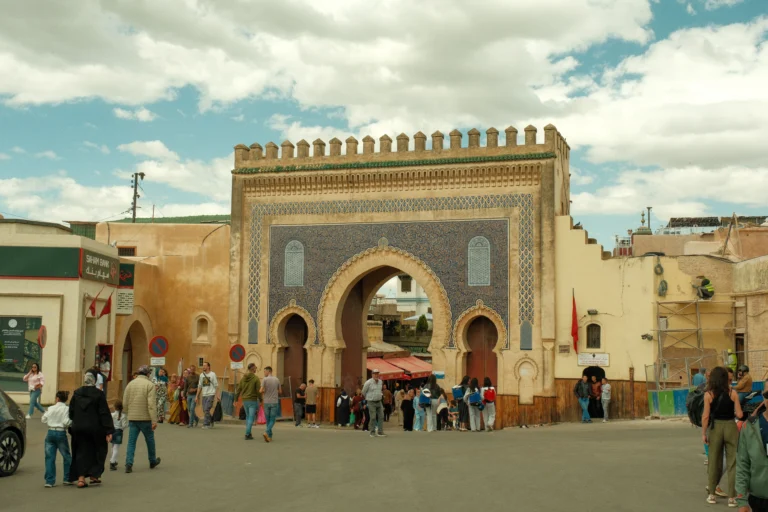
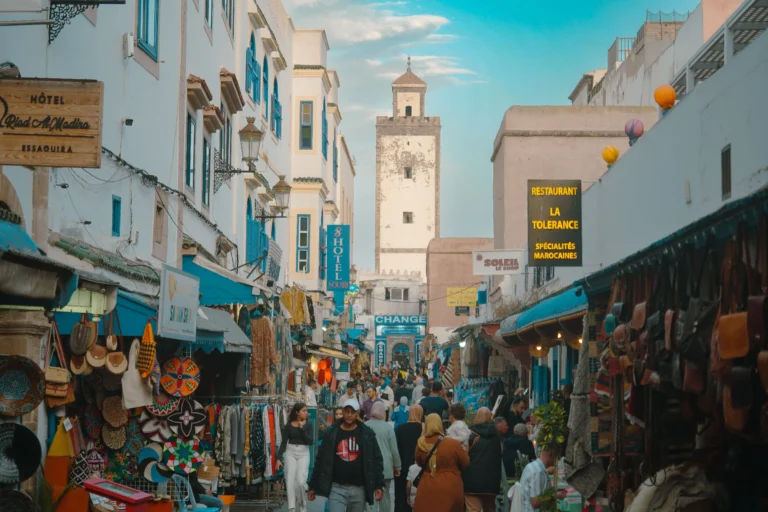
Morocco hits you the second you land — mint tea and grilled meat smells drifting through the medina, the call to prayer bouncing off pink kasbah walls, the Atlas Mountains just casually rising behind palm-lined valleys like they own the place. It’s one of the most photogenic, delicious, culturally rich countries out there, and here’s the part that surprises most people: you don’t need a big budget to actually experience it properly.
Sure, there are five-star riads with rooftop plunge pools and private desert camps with someone literally bringing you tea in bed. Cool, if that’s your thing. But budget travel in Morocco is honestly where the real magic happens. Skip the resort bubble and you can eat like a local, sleep in centuries-old medinas, and cross the actual Sahara — all for $30–$45 a day. This guide covers everything from 5-dirham street snacks to the “secret” towns tour buses never find, so whether you’re backpacking on a shoestring or just want to make your dirhams stretch further, you’re covered.
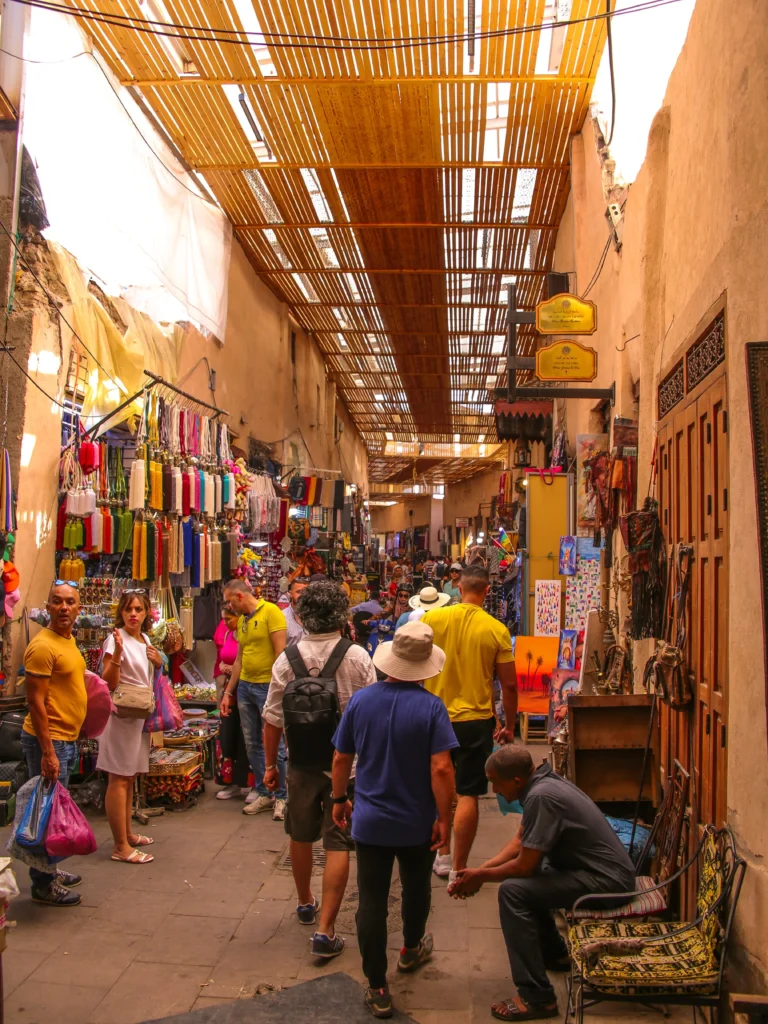
The Real Cost of Travel: 2026 Budget Breakdowns
Before you book anything, let’s talk numbers, because that’s probably why you’re here. Prices shift a bit by region — Marrakech and Chefchaouen run a touch higher than smaller towns — but here’s the general vibe across the country for 2026.
The “Backpacker” Tier: 300–450 MAD ($30–$45) per day. This gets you a hostel bed, street food and cheap cafés, and getting around by shared taxi or local bus. This is your cheap-travel-in-Morocco sweet spot — comfy enough, cheap enough, still feels like an adventure.
The “Mid-Range” Tier: 700–1,200 MAD ($70–$120) per day. Now we’re talking private riad rooms, actual restaurant meals, second-class trains. Not luxury, but a nice step up if hostel bunk beds aren’t calling your name.
Quick cheat sheet so you’re not guessing:
- Hostel bed: 70–150 MAD a night
- Street food snack: starts at basically nothing, 5 MAD
- Intercity bus: 70–200 MAD depending how far you’re going
Even leaning toward the pricier end of low-cost travel Morocco, 10 days is doable for a few hundred bucks total. That’s basically the whole appeal — it’s genuinely cheap here, and you’re not skimping on the good stuff to make it happen.
Transport Hacks: Getting Around Like a Local
Honestly, transport is half the fun here — it’s cheap, it’s everywhere, and it’s kind of an experience on its own.
Grand taxis are the real MVP of getting around. They’re old Mercedes that legally squeeze in six passengers headed the same direction, and they’re a steal compared to a private ride — think 50 MAD for a seat toward the Atlas Mountains versus 400+ MAD if you book your own car. Just find the taxi rank (“stationnement”) for wherever you’re headed and hop in once there’s a free seat.
For longer trips, stick with CTM or Supratours — the two bus companies that actually run on time and have AC that works (a genuinely huge deal, do not underestimate this). Going between Tangier and Casablanca? Take the Al Boraq high-speed train instead — fast, cheap, and way better than sitting in a car for hours.
Hitchhiking is also apparently super common here and, from what people say, genuinely easy and fun. You might end up getting invited for tea or a home-cooked meal along the way. Obviously use normal travel common sense like anywhere, but it says a lot about how welcoming things are.
Accommodation: Riads, Hostels, or Just Sleeping Under the Stars?
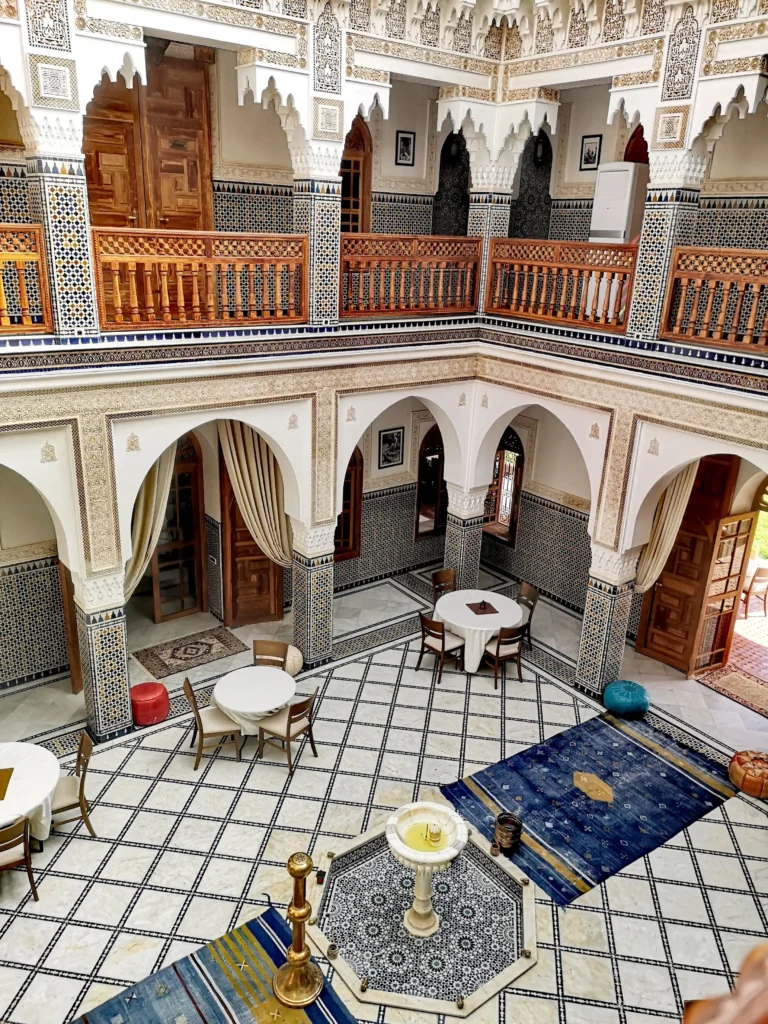
One of the best things about budget travel in Morocco? You really don’t need to spend a fortune to stay somewhere gorgeous. Honestly, some of the cheapest options end up being the most memorable ones.
Stay in a Riad-Hostel
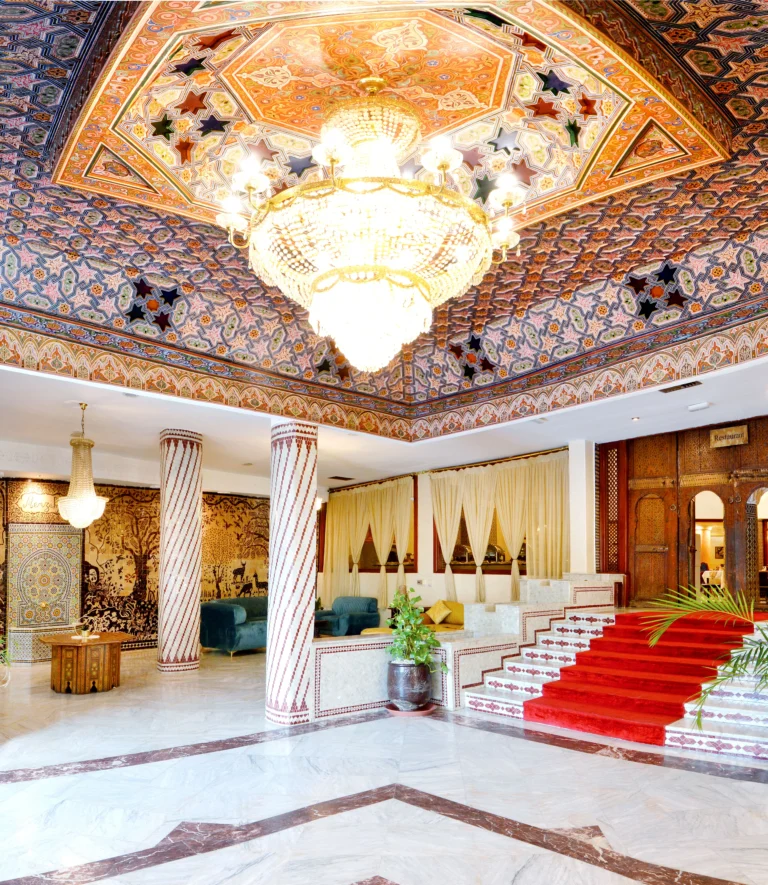
If you’ve never stayed in a riad, get ready. A lot of hostels here are actually restored traditional houses — colorful tilework, peaceful courtyards, rooftop terraces, the whole deal. It just feels way fancier than your average backpacker hostel, even when it’s costing you basically nothing.
Average Morocco hostel prices land around 80–180 MAD (€8–€18) a night, which is pretty hard to beat.
A few favorites worth checking out:
Marrakech
- Equity Point Marrakech — Good pick if you want a social vibe, a pool, and service that actually runs smoothly.
- Riad Dia — Full of character, colorful decor, and a killer location right in the Medina.
Fes
- Funky Fes — Great for meeting other travelers, especially if it’s your first Morocco trip and you’re a bit nervous.
Taghazout
- This place is basically hostel central for surfers and long-term budget travelers. Roof House Hostel has that tight-knit, everyone’s-friends-by-day-two energy, while Happy Surf is great if you’re mostly just chasing the best deal.
For something more traditional, the riad experience is really hard to beat. It’s a classic Moroccan house built around a courtyard, usually with plants, a little fountain, and gorgeous tilework everywhere. Staying in one just feels like the “real” Morocco, and budget rooms start around 150–350 MAD a night — genuinely a steal for how magical they feel.
Feeling brave? Wild camping is also totally a thing. Pitching a tent for free is pretty normal in spots like the Sahara dunes or the Atlas foothills — just double-check locally first and don’t be that person camping on someone’s actual land.
Beyond the “Blue City”: Morocco’s 12 Best Hidden Gems
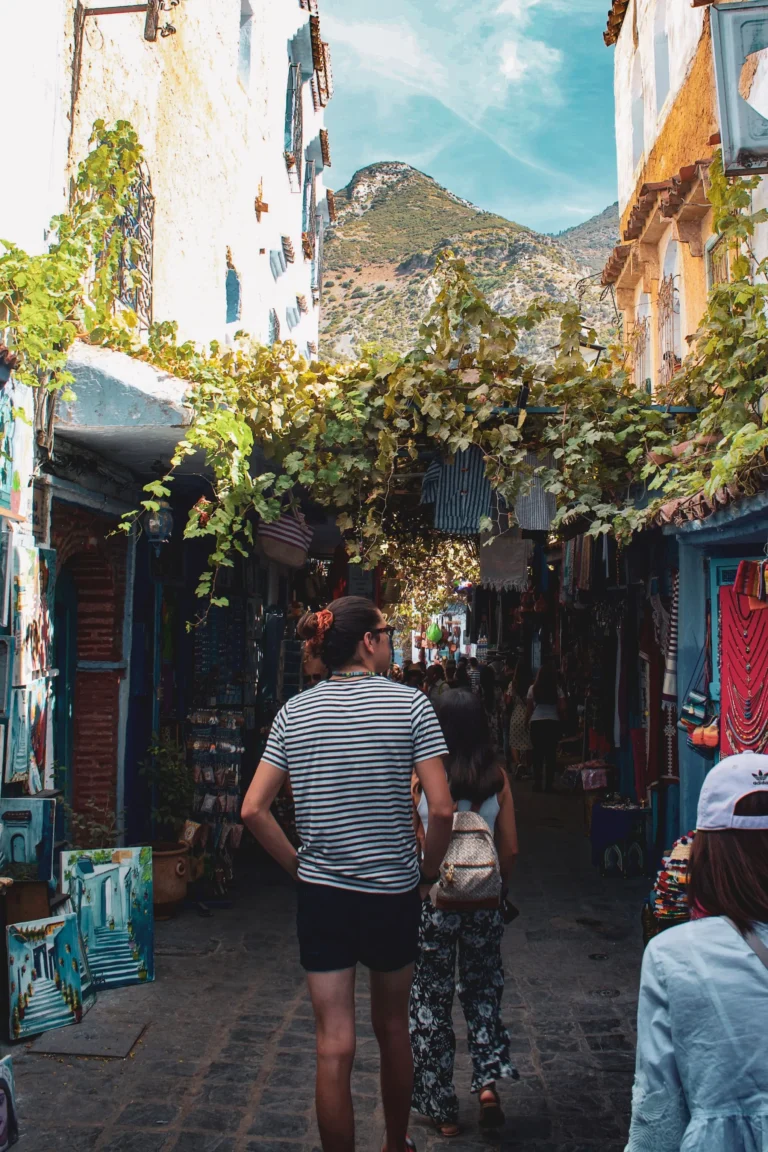
Chefchaouen gets all the Instagram fame with its blue streets, and fair enough, it’s stunning. But some of Morocco’s best spots are the ones nobody’s posting about. Here’s five worth adding to your list:
- Tamnougalt — Same energy as the famous Aït Benhaddou kasbah, minus the tour buses and crowds.
- Moulay Idriss Zerhoun — A sacred hilltop town that feels rustic and real, not touristy at all.
- Asilah — Coastal, chill, and it’s got its own annual art festival going on.
- Bin el Ouidane — A turquoise reservoir in the High Atlas that looks almost fake it’s so pretty.
- Sidi Ifni — A weirdly wonderful mix of Moorish architecture and Spanish Art Deco. Doesn’t look like anywhere else.
Squeezing even a couple of these into your route is honestly one of the smartest budget travel tips for Morocco — cheaper than the big-name spots and way less “everyone’s got a selfie stick” chaos.
Culinary Survival Guide: Eat Well for Under $10/Day
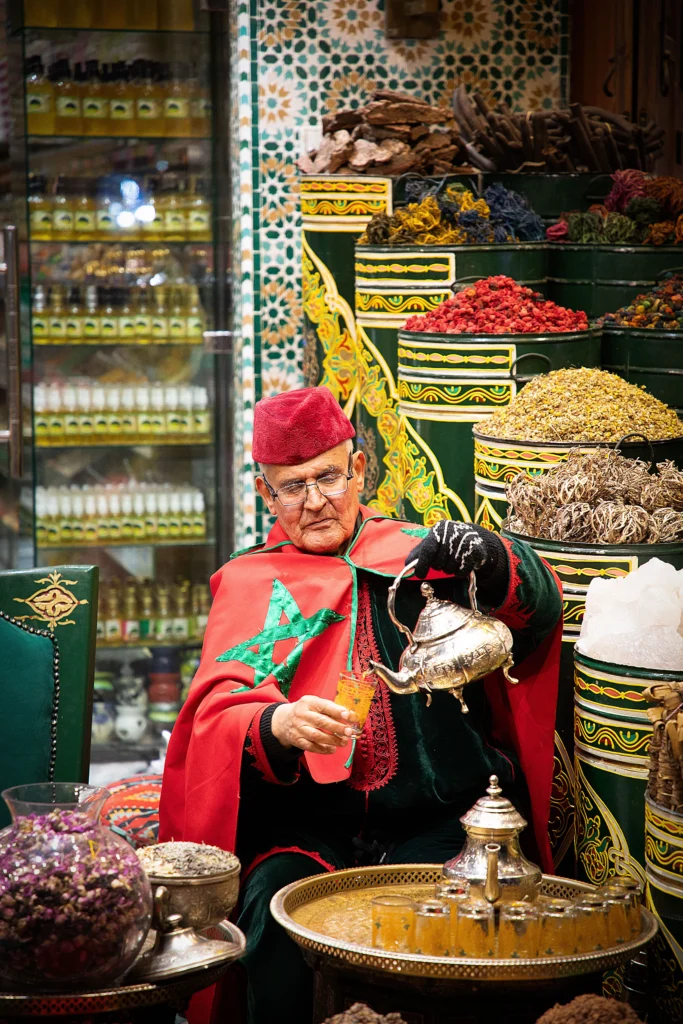
Moroccan food alone is worth the plane ticket, and the best part is you barely need cash to eat well.
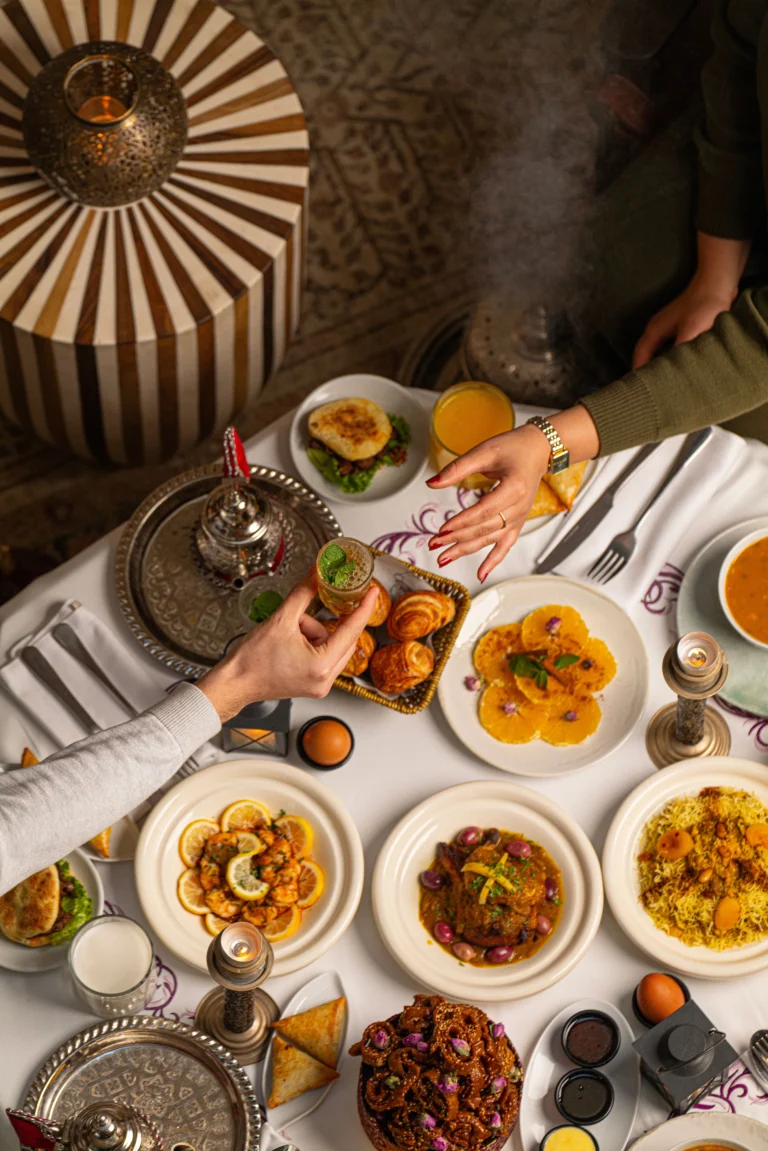
Start with harira soup (5–10 MAD) — a hearty tomato-lentil soup that’s basically a full meal in a bowl. Then there’s msemen (2–5 MAD), a flaky flatbread perfect any time of day but especially breakfast. And if you get the chance, try pastilla — sweet-and-savory pie with spiced meat, almonds, and powdered sugar on top. Sounds like a strange combo, tastes incredible, just trust the process.
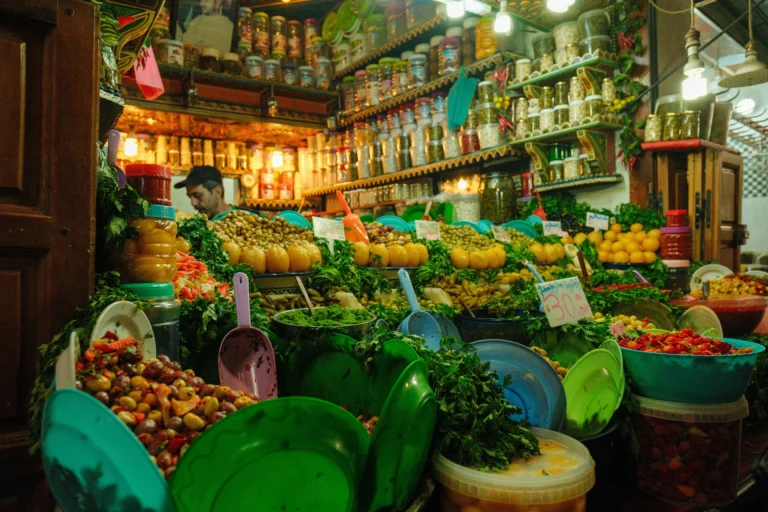
Mint tea is everywhere, all day, every temperature — yes, even when it’s boiling outside, and somehow it still works. And don’t sleep on the olives from street stalls, because they’re nothing like the sad jarred ones back home. Try a few different vendors, they’re all a little different.
Biggest money-saving tip here: skip the restaurants near the tourist squares and eat where the locals actually eat. Same tagines, same grills, half the price — and honestly, usually way better food too.
Master Your Trip: Pro Tips & Cultural Nuances
A few local customs that’ll genuinely make your trip smoother and cheaper.
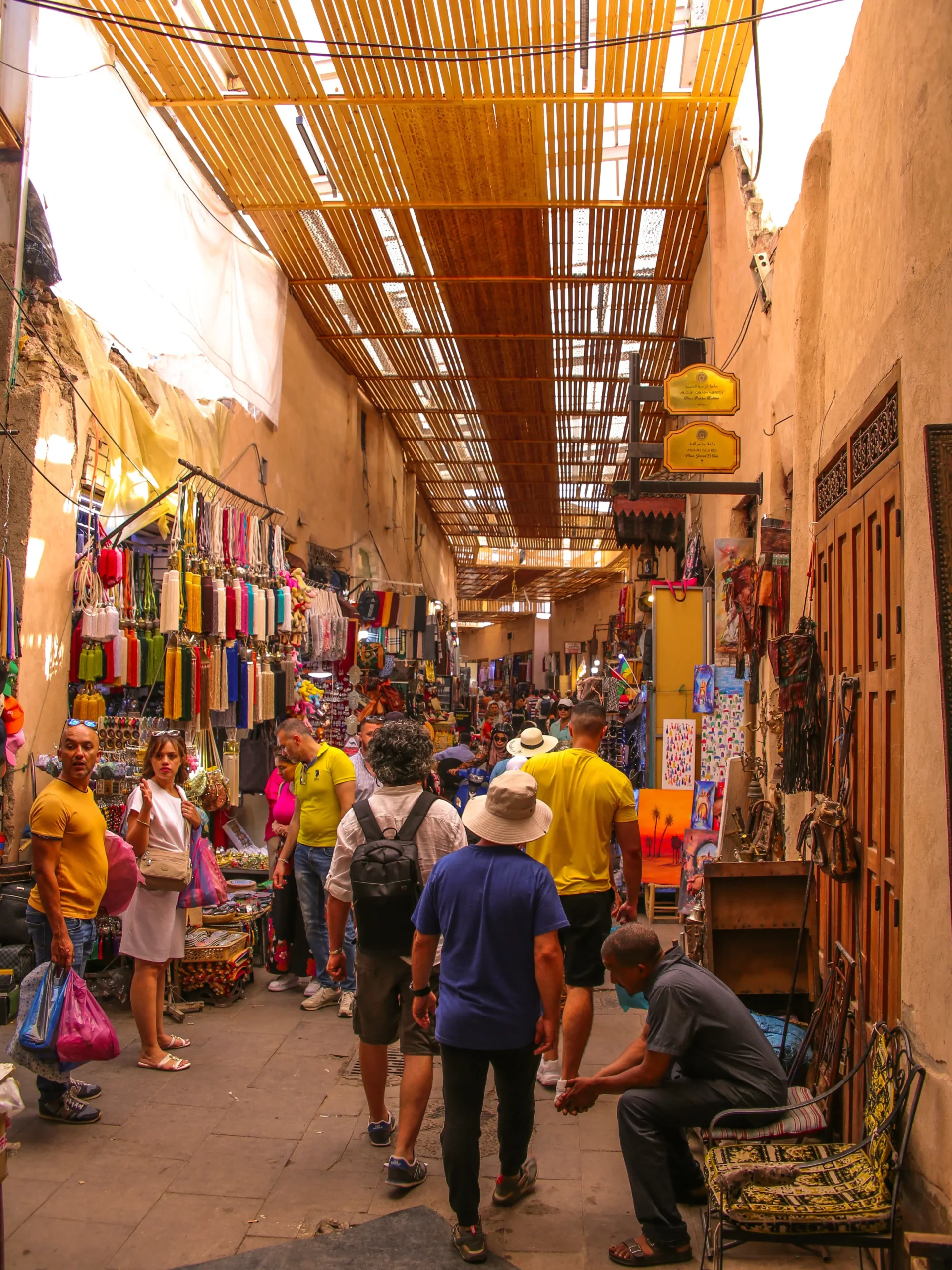
Haggling 101: Nothing in the souks is fixed price. Start your offer around 40% of whatever they first quote you, then work up from there. And don’t be scared to just walk away — sellers will chase you down with a better price more often than you’d expect. It’s kind of a fun game once you get into it.
Connectivity: Grab a local SIM from Maroc Telecom or Orange for around 30 MAD, with cheap data packages. Easy setup, worth every dirham.
Money management: This is a cash-heavy country, especially in the medinas. Keep dirhams on you and don’t count on cards outside the bigger hotels and shops.
Language: “Salam” (hello) and “Shukran” (thank you) go way further than you’d think. People genuinely light up, and it might just score you a better price too.
Sample Itineraries: 1-Week and 2-Week Routes
1-Week Route: Marrakech → Essaouira → Chefchaouen → Fes. A solid mix — big city buzz in Marrakech, chill coastal vibes in Essaouira, blue-street photo spam in Chefchaouen, and the maze that is Fes.
2-Week Road Trip: Casablanca → Rabat → Chefchaouen → Moulay Idriss → Sahara → Atlas Mountains → Marrakech. This one’s the full package — coast, mountains, desert, and finishing strong in Marrakech.
The Sahara: Totally Worth the Splurge
If there’s one thing worth spending a little extra on, it’s the Sahara. No debate.
Good news: it still won’t break the bank.
Most shared 3-day tours from Marrakech to Merzouga run around €60–€100, and they usually cover transport, a camel ride, desert camping, and a bunch of meals.
Compared to a private tour, it’s an unreal deal.
For a lot of travelers, that one night under a sky absolutely packed with stars ends up being the highlight of the whole trip. And if you’re solo, shared tours are also one of the easiest ways to make friends fast.
There’s genuinely something magical about sitting around a campfire in the middle of the desert. You won’t forget it, promise.
A 7-Day Budget-Friendly Morocco Itinerary
Not sure how to squeeze everything into one week? Here’s a route that gives you a bit of everything — busy cities, desert adventures, ocean views, and way too much good food — without wrecking your budget.
Days 1–2: Fall in Love with Marrakech
Kick things off in the colorful chaos of Marrakech. Spend your first couple days wandering the Medina, getting happily lost in the winding alleys (happens to literally everyone, don’t worry about it), and just soaking it all in.
Don’t miss:
- Bahia Palace
- Jemaa el-Fnaa square
- The local souks — great for shopping and even better for people-watching
- Basically all the street food you can handle
Don’t rush this part. Marrakech is one of those cities where the best moments happen once you stop trying to follow the map.
Days 3–4: Head to the Sahara
Now for one of the biggest highlights of the whole trip.
Join a shared 3-day tour to Merzouga, ride a camel across the dunes, and spend the night at a desert camp under an absolutely stacked sky of stars. Sounds cliché, I know, but it’s every bit as magical as people say — maybe more.
You’ll also roll through the Atlas Mountains and some dramatic valleys along the way, so keep your camera charged.
Day 5: Back to Marrakech
After the desert, head back to Marrakech and take it easy for a bit — you’ve earned it.
A traditional Moroccan hammam is basically the perfect reward after a few dusty days on the road. Relaxing, refreshing, and honestly one of those things you’ll still be talking about weeks later.
Wrap up the night with one last tagine. Or two. No judgment here.
Day 6: Escape to Essaouira
Hop a CTM bus over to Essaouira, Morocco’s laid-back coastal town.
Totally different energy from Marrakech — think ocean breeze, white-and-blue buildings, friendly locals, and some of the freshest seafood you’ll ever put in your mouth.
Walk the old port, poke around the little artisan shops, and just let yourself slow down for a day.
Day 7: One Last Relaxing Morning
Spend your last morning wandering Essaouira, grabbing coffee by the water, or picking up a few last-minute souvenirs before heading to the airport.
A calm, easy way to close out an unforgettable week.
Money-Saving Tips (That Actually Work)
Saving money in Morocco doesn’t mean missing out on anything. A few smart habits and you’ll have plenty of extra cash for the stuff you’ll actually remember.
Start Lower When Bargaining
Shopping in the souks? Bargaining isn’t just normal, it’s expected.
Good rule of thumb: start around 30–40% of the first price they throw at you. Keep it friendly, smile a lot, and don’t be afraid to walk away if it doesn’t feel right.
You’d be surprised how fast the price drops the second you start leaving.
Cash Is Still Your Best Friend
More places take cards these days, but cash is still king in a lot of Morocco.
A few tips:
- Use ATMs to grab cash as you go.
- Break big bills at supermarkets whenever you get the chance.
- Keep small notes on you, because “sorry, no change” is basically a national catchphrase.
Having the right cash on hand saves you a surprising amount of hassle.
Watch Out for “Helpful” Strangers
You’ll meet plenty of genuinely kind people on this trip, but every now and then someone will offer to guide you through the Medina without you asking for it.
More often than not, they’ll want payment at the end — or steer you toward shops where they get a cut.
A polite, confident “No, thank you” is really all you need before carrying on with your day.
Final Thoughts
Here’s the thing about budget travel in Morocco: spending less doesn’t mean seeing less.
With a daily budget of around €38–€55, you can sleep in beautiful riads, eat incredible food, get around easily, and hit everything from buzzing medinas to the quiet, star-filled Sahara — all without stressing over every dirham.
And honestly, 2026 is a great time to go. With Morocco gearing up for the 2030 FIFA World Cup, prices are only expected to climb over the next few years. Going now means better value and still all that famous hospitality and jaw-dropping scenery.
Whether you’re wandering Marrakech’s colorful streets, watching the sun go down over the Sahara, or eating fresh seafood by the coast in Essaouira, Morocco just has a way of surprising you around every corner.
So pack light, bring your sense of adventure, learn a couple words of Arabic (locals genuinely appreciate the effort), and don’t stress about planning every single minute. The best memories usually come from getting a little lost, chatting with friendly locals, and just saying yes to whatever comes up.
Trust me, you’ll probably be planning your next trip back before you’ve even left.
FAQ
Is Morocco expensive? Nope, not really. It’s widely known as a great-value destination — around $300 can cover a full 10-day trip if you’re keeping it backpacker-style.
Is street food actually safe? Yeah, generally. Just go where there’s a crowd — busy usually means fresh.
When’s the cheapest time to visit? Shoulder season — November to mid-December, and February to March — usually means 30–50% off accommodation compared to peak months.
Should I just rent a car? If you’re with family or a small group, it can actually end up cheaper than juggling public transport (around £19/day), plus you get way more flexibility.
Morocco doesn’t really reward big spending — it rewards showing up curious. The cheapest stuff — a shared taxi ride, a bowl of harira from some random stall, mint tea with a stranger who just wants to practice their English — usually ends up being the best part of the whole trip anyway. So go ahead, book the budget version. You’re not missing out on a thing.